
Business continuity plan vs disaster recovery plan: draw the line that protects your service


Many IT leaders still treat business continuity and disaster recovery as the same thing. That confusion creates false confidence when a disruption hits. At Assurestor, we focus on whether your plan keeps services running for customers and staff, not just whether systems come back online afterwards. This guide clears the line between continuity and recovery, helping hybrid IT teams and MSPs protect their service reputation and data for good.
Understanding Business Continuity
Business continuity ensures your operations keep running smoothly, even amid disruptions. Let’s explore what separates business continuity from disaster recovery.
Defining Continuity vs Recovery
Continuity focuses on keeping your business running during unexpected events. Recovery aims to restore systems after a disruption. While both are crucial, they serve different purposes. Business continuity ensures that operations remain unaffected, while recovery focuses on bringing systems back online.
The Role of a Business Continuity Plan
A business continuity plan is your roadmap for maintaining essential functions during a crisis. It covers everything from staff roles to communication strategies. By preparing for the unexpected, you safeguard your service reputation and customer trust. This plan is not just about technology; it’s about people and processes too.
Importance of Incident Communication
Clear communication during an incident can make or break your response. Your plan should include protocols for updating staff and customers. Keeping everyone informed minimises confusion and helps maintain confidence in your business. This proactive approach ensures that your team can act decisively when it matters most.
Disaster Recovery Essentials
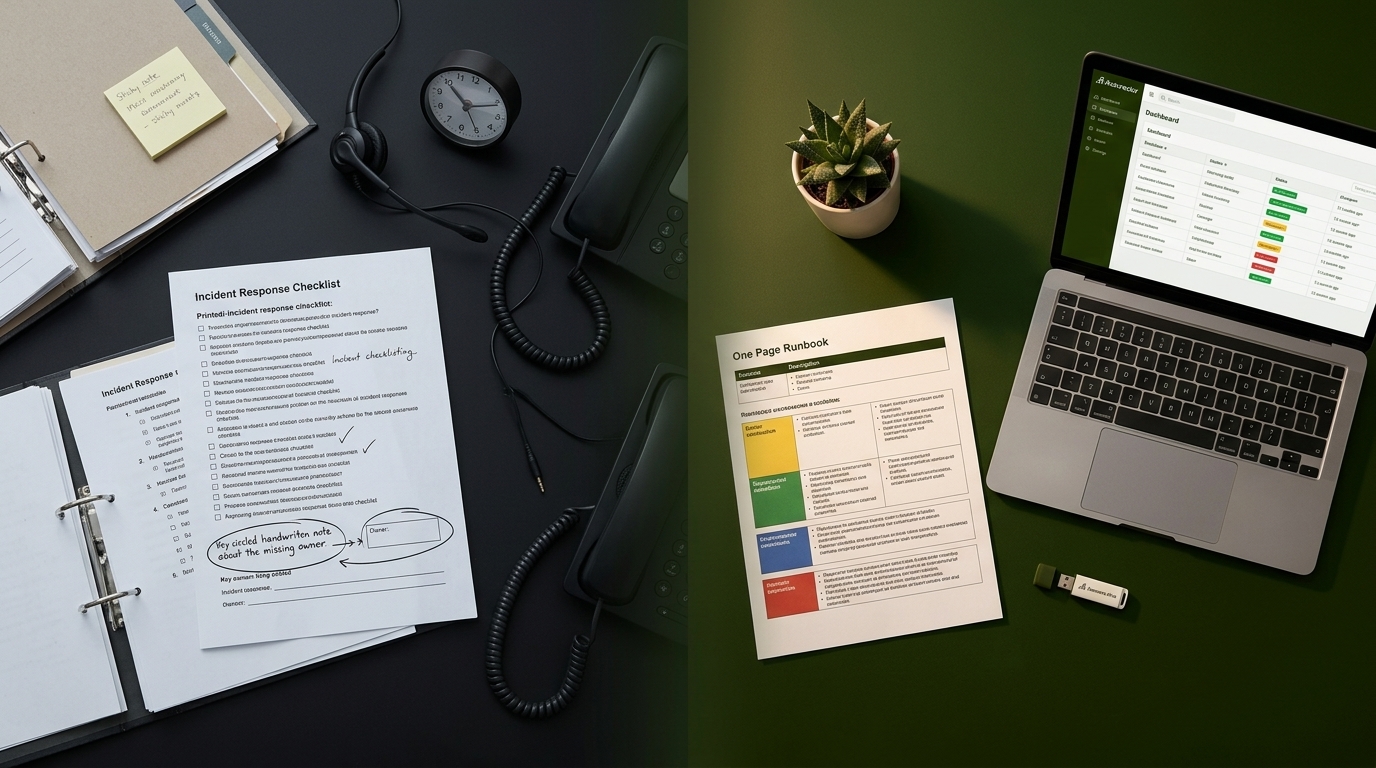
While business continuity keeps you running, disaster recovery focuses on bouncing back. Let’s dive into the essentials of a disaster recovery plan.
Purpose and Timing of a Disaster Recovery Plan
A disaster recovery plan is your safety net for getting systems back online after a disruption. It’s not about keeping operations steady; it’s about restoration. Timing is critical: the faster you can recover, the less impact on your business. Knowing when to switch from continuity to recovery is key to minimising downtime.
Key Elements: RTO and RPO
Recovery Time Objective (RTO) and Recovery Point Objective (RPO) are the pillars of disaster recovery. RTO defines how quickly you need to restore operations, RPO specifies how much data you can afford to lose. Together, they guide your recovery strategy, ensuring you meet business needs without compromising data integrity.
Failover Testing and Operational Handover
Failover testing ensures that your recovery plan works in real scenarios. It’s about proving your systems can switch to backup modes smoothly. Operational handover, meanwhile, focuses on who takes charge during a recovery. Clear roles and responsibilities prevent chaos and ensure a swift return to normalcy.
Integrating Continuity and Recovery

To truly protect your business, continuity and recovery must work hand-in-hand. Here’s how to integrate both for resilience.
Why Hybrid IT Resilience Matters
In hybrid IT environments, resilience is about more than technology. It’s also about partnerships and processes. Combining continuity and recovery ensures that you not only survive disruptions but thrive through them. Achieving this balance protects both your service reputation and your data assets.
Partner Collaboration for Service Continuity
Partners play a crucial role in maintaining service continuity. By collaborating with experts, you enhance your resilience strategy. This collaboration ensures that your plan is comprehensive, covering all aspects from technical recovery to operational readiness.
Conducting Effective Tabletop Exercises
Tabletop exercises simulate disruptions, allowing you to test your plans in a controlled setting. These exercises highlight gaps in your strategy and improve team readiness. Regular practice ensures that when a real incident occurs, your team is prepared to act confidently and effectively.
Frequently Asked Questions
What is the main difference between business continuity and disaster recovery?
Business continuity ensures operations continue during a disruption, while disaster recovery focuses on restoring systems afterwards.
Why is incident communication important in a business continuity plan?
Clear communication minimises confusion, maintains trust and ensures that everyone knows their roles during an incident.
How do RTO and RPO differ in disaster recovery planning?
RTO defines how quickly you need to restore operations, while RPO specifies the maximum data loss your business can tolerate.
What role do partners play in service continuity?
Partners enhance your resilience strategy by providing expertise and resources that support both technical recovery and operational readiness.
Why are tabletop exercises critical for resilience?
They simulate real disruptions, allowing you to test and refine your plans, ensuring your team is ready to handle actual incidents effectively.