
Business continuity plan examples that scale across hybrid IT and SaaS


Most business continuity plans crumble when stretched across hybrid IT and SaaS environments. You know the pain: every new client adds a fresh set of exceptions, turning recovery into a maze of unique fixes. This post reveals business continuity plan examples that keep protection consistent and delivery simple—no extra complexity as you scale. Stick around to see how standardised runbooks and repeatable recovery models can become your channel’s strongest asset this Back to Business season.
For more insights on creating a robust disaster recovery plan, check out our guide on How to Build a Hybrid IT Disaster Recovery Plan: Map First, Recover Right. Additionally, explore an IT disaster recovery plan template that scales, offering one portal and total visibility. For MSPs, another valuable resource is the disaster recovery plan template for MSPs, which provides one workflow and full control.
For more information about our services, please visit Assurestor.
Challenging Traditional Continuity Planning
Many assume that continuity planning is mainly about documenting recovery steps. But as companies grow and hybrid IT environments become more complex, the hidden costs of traditional continuity plans reveal themselves. These plans often fall short, especially when they are tailored to each specific situation, creating a complex web of exceptions and unique fixes.
Exposing Hidden Costs in Hybrid IT
Traditional continuity plans can become a burden. Each new SaaS application or IT environment adds layers of complexity. This complexity brings hidden costs, like increased time spent managing disparate systems and higher risk of failure during actual recovery. Instead of offering protection, such plans can lead to more points of failure. Many IT managers find themselves navigating a maze of exceptions, each requiring its own unique fix, which is neither efficient nor reliable.
Beyond Documenting Recovery Steps
A continuity plan is more than a checklist of recovery steps. While documentation is important, it is insufficient on its own. To truly protect your business, plans must be adaptable, ready to apply across various environments without becoming overly complicated. This means creating a strategy that is repeatable and consistent, one that does not require starting from scratch every time you face a new challenge. The key is to develop operational patterns that ensure consistent protection and swift recovery.
Operational Patterns for Consistent Protection
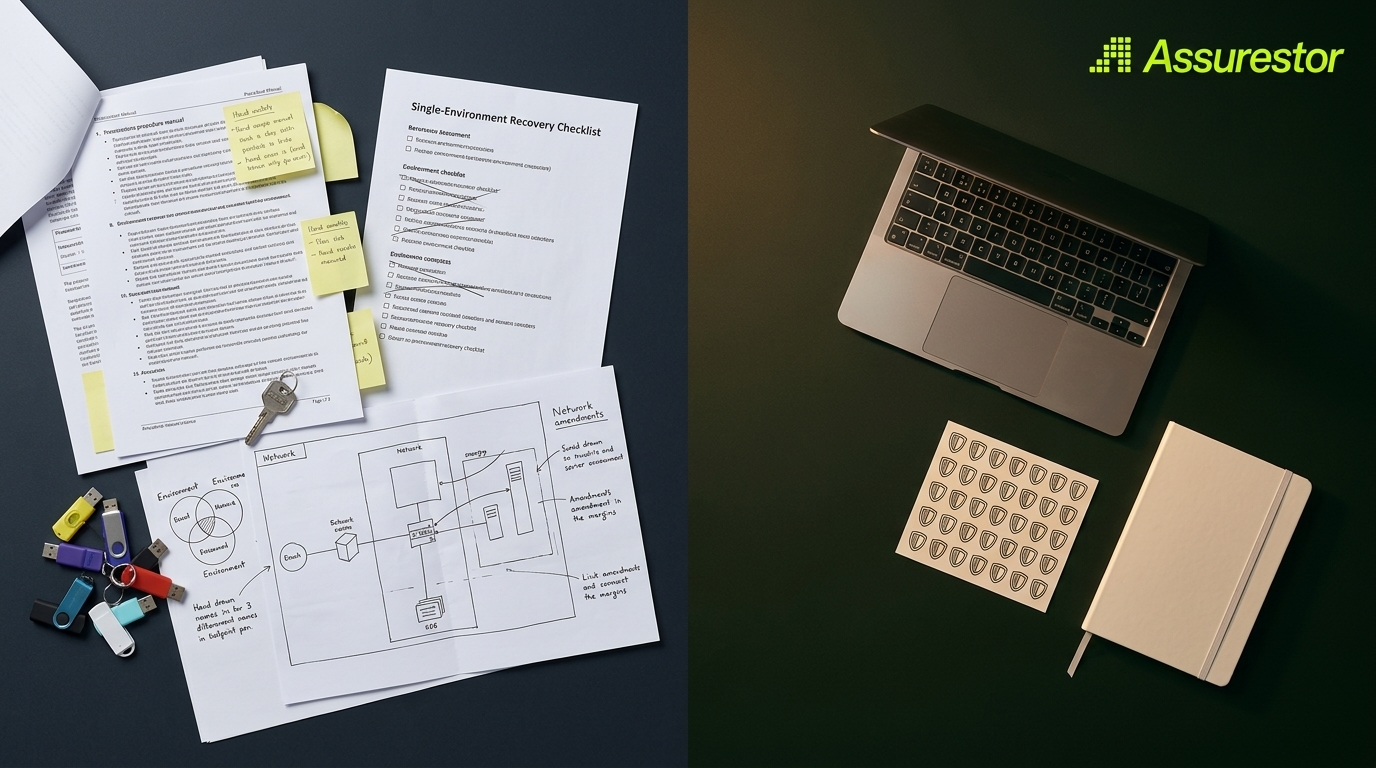
To maintain consistent protection across different environments, businesses need operational patterns that can be easily repeated. Standardised runbooks and a repeatable recovery model are essential components of this strategy.
Standardised Runbooks in Action
Standardised runbooks simplify the chaos. Imagine having a set of clearly defined procedures that## Challenging Traditional Continuity Planning
Traditional continuity planning often falls short in today’s hybrid IT environments. Let’s uncover why these plans fail and how you can avoid their pitfalls.
Exposing Hidden Costs in Hybrid IT
Hybrid IT systems come with hidden costs that are often overlooked. Every time you add a new customer, the complexity of your IT environment increases. This complexity can lead to unforeseen expenses, such as maintaining multiple tools for different systems. When you integrate various SaaS applications, the need for specialised recovery solutions can strain your budget. Instead of a smooth operation, you might face a fragmented system that requires more resources to manage.
The more fragmented your system, the more likely you are to encounter downtime. This downtime isn’t just costly in terms of money but also in terms of customer trust. Clients expect seamless service, and even short interruptions can lead to dissatisfaction. By focusing on a consistent recovery model, you can avoid these hidden costs and deliver reliable service.
Beyond Documenting Recovery Steps
Merely documenting recovery steps isn’t enough. You need a plan that adapts to any situation without adding complexity. A simple list of steps won’t provide the flexibility needed in a dynamic environment. Instead, focus on creating adaptable frameworks that guide you through different scenarios.
Consider using standardised runbooks. These provide a clear, repeatable process for recovery that can be applied across various situations. By standardising your approach, you ensure that every team member knows what to do, reducing the chance of errors. This approach not only speeds up recovery but also ensures consistency, keeping your clients happy.
Operational Patterns for Consistent Protection
Let’s explore how operational patterns can lead to consistent protection across hybrid environments. These patterns are the backbone of a solid continuity plan.
Standardised Runbooks in Action
Standardised runbooks are a game changer. They provide a detailed guide for handling different recovery scenarios. Imagine a scenario where a server goes down. With a runbook, you have a predefined set of actions to follow. This consistency ensures no time is wasted on figuring out what to do next.
By implementing runbooks, you streamline the recovery process. Your team can quickly identify the issue and take the necessary steps to fix it. This not only reduces downtime but also builds client confidence in your ability to handle emergencies. For channel partners, this is crucial. It means you can deliver the same level of protection to every client without reinventing the wheel each time.
Repeatable Recovery Model Benefits
A repeatable recovery model offers numerous benefits. First, it reduces the learning curve for your team. With a standard process, new members can quickly get up to speed. This consistency also means that you can scale your operations without worrying about increased complexity.
Moreover, a repeatable model builds trust with your clients. They know what to expect and can rely on you to deliver consistent results. This trust is invaluable, especially when you’re dealing with sensitive data. By offering a proven recovery model, you position yourself as a reliable partner in data protection.
Confidence in a Repeatable Model

A repeatable model not only simplifies operations but also instils confidence in your ability to handle disasters efficiently.
Partnering for Sustainable Growth
By adopting a standardised model, you set the stage for sustainable growth. You can easily onboard new clients without worrying about the strain on your resources. This scalability is crucial for MSPs looking to expand their services.
Moreover, a robust recovery model enhances your reputation. Clients are more likely to recommend your services if they know you can deliver consistent results. This word-of-mouth marketing is one of the most powerful tools for growth. By focusing on a repeatable model, you secure your position as a leader in data protection.
Channel-Only Data Protection Solutions
Channel-only solutions offer a unique advantage. They allow you to deliver specialised services without the burden of managing complex infrastructure. By working with trusted vendors, you can offer top-notch protection tailored to your clients’ needs.
These solutions also ensure that you remain competitive in the market. With access to the latest technology and support, you can offer services that smaller providers can’t match. This not only attracts new clients but also retains existing ones. In a rapidly changing market, having a reliable partner network is invaluable.
Frequently Asked Questions
What are the hidden costs in hybrid IT environments?
Hidden costs include maintaining multiple tools and specialised solutions for different systems. These can lead to increased complexity and downtime, impacting your budget and customer trust.
How do standardised runbooks improve recovery processes?
Standardised runbooks provide a clear, repeatable process for recovery. They ensure that every team member knows what to do, reducing errors and speeding up recovery.
Why is a repeatable recovery model important?
A repeatable model reduces the learning curve for new team members and builds client trust by delivering consistent results. It also allows for scalable operations and sustainable growth.
What are the benefits of channel-only data protection solutions?
Channel-only solutions offer specialised services without complex infrastructure management. They ensure competitiveness and provide access to the latest technology and support.
How can I ensure consistent protection across hybrid IT environments?
By adopting standardised runbooks and a repeatable recovery model, you can deliver consistent protection. These approaches reduce complexity and build client confidence in your services.